Autonomy & Intelligence
From pre-programmed tasks to world models that learn and adapt without updates.
3 years ago (2023)
Robots followed rigidly programmed routines. No transfer learning between tasks. Teleoperation was common. AI was separate from robotics. Most robots couldn't recognize novel objects. Safety required physical cages and separation.
Now (2026)
World models enable task learning without software updates (KAI). Foundation models trained on 100k+ hours of human video. Zero-shot generalization to new objects and environments. On-device LLMs for natural language commands. Collaborative robots work alongside humans without safety cages.
Next 3 years
True physical intelligence — robots that understand physics, causality, and social norms. Self-improving skills through practice. Multi-robot coordination without central control. AI that explains its reasoning in natural language. Human-level general-purpose home assistance.
Related Robots
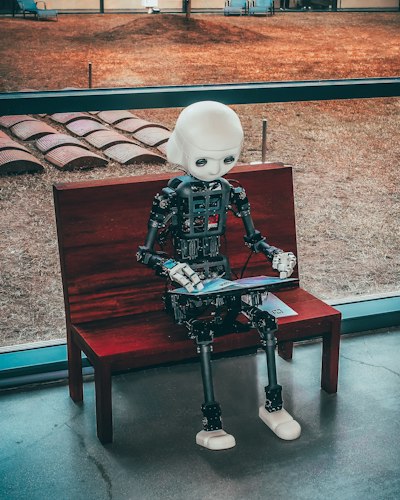
Full-sized humanoid with 115 degrees of freedom — nearly triple rivals — and tactile skin with 18,000 sensors detecting forces as light as 0.1N. Powered by the KAI World Model trained on 100,000+ hours of first-person egocentric video via the KAI Halo headset. Semi-solid-state 1.7kWh battery for home safety. Founded by XPeng Robotics alumni.
Latest generation humanoid robot from Figure AI built on Qualcomm safety-grade SoC platforms. Comprehensive physical AI stack with improved perception, manipulation, and autonomy.
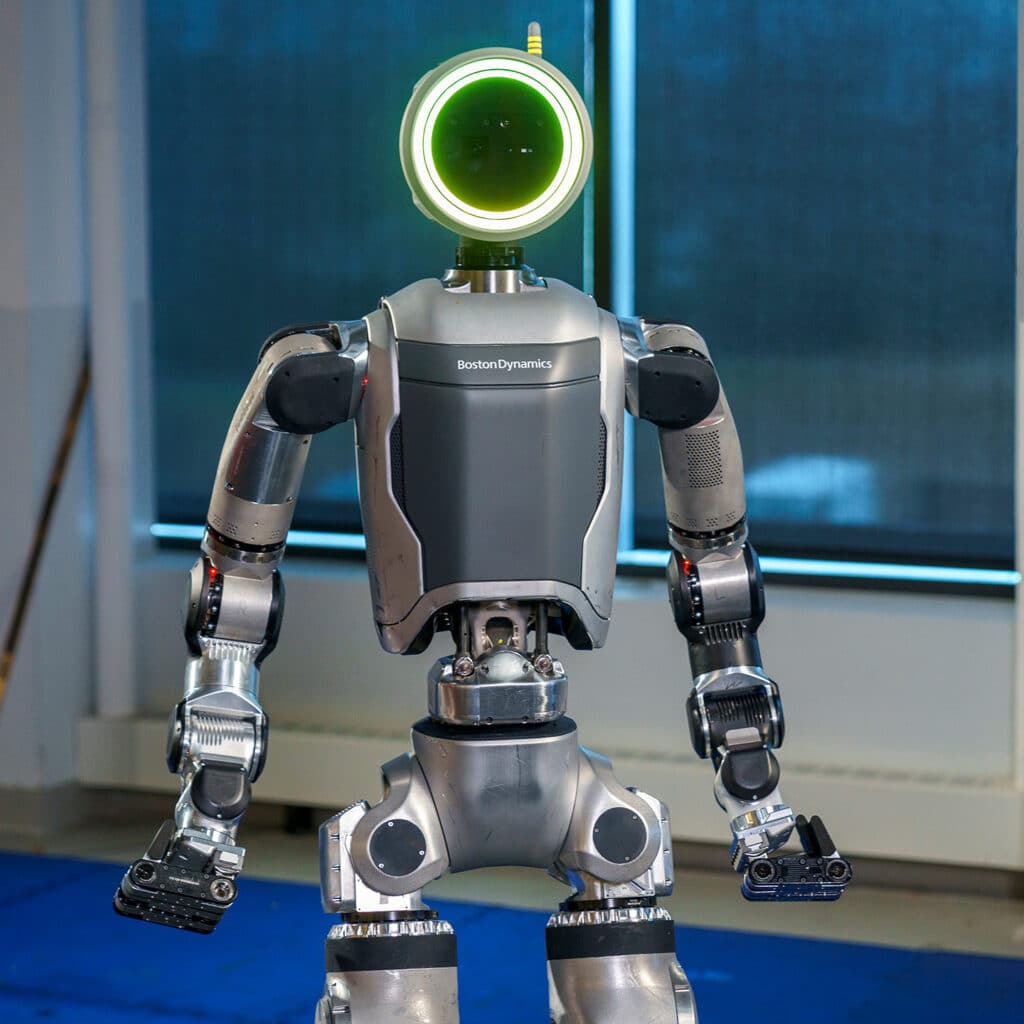
Fully electric humanoid robot with advanced mobility, manipulation, and AI-powered perception. Successor to the hydraulic Atlas platform.