Tactile Skin & Sensing
From bump sensors to whole-body artificial skin with thousands of sensing points.
3 years ago (2023)
Basic contact and force sensors on gripper fingertips. Bump sensors for collision detection. No full-body tactile sensing. iCub had some experimental skin patches. Safety relied on torque sensing and force-limited joints.
Now (2026)
KAI's tactile skin has 18,000 sensors across its body, detecting forces as light as 0.1N. Clone Robotics uses myomorphic artificial muscle with integrated sensing. Synthetic skin covers full-size humanoids. Temperature sensing being integrated. Pain reflex circuits in development.
Next 3 years
Self-healing skin layers that repair minor damage. Texture discrimination (silk vs. sandpaper). Moisture detection for safe object handling. Full-body haptic feedback for teleoperation. Sensing density approaching human fingertip resolution (500+ sensors/cm2).
Related Robots
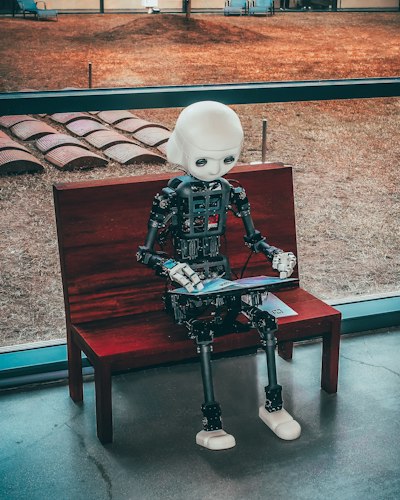
Full-sized humanoid with 115 degrees of freedom — nearly triple rivals — and tactile skin with 18,000 sensors detecting forces as light as 0.1N. Powered by the KAI World Model trained on 100,000+ hours of first-person egocentric video via the KAI Halo headset. Semi-solid-state 1.7kWh battery for home safety. Founded by XPeng Robotics alumni.
Full android with a fluid-driven musculoskeletal system — no electric motors or rigid actuators. Uses proprietary Myofiber hydraulic artificial muscles powered by pressurized water. 170cm tall, 60kg, with 206 synthetic bones, 164 degrees of freedom, and roughly 1000 artificial muscles. Mimics biological human anatomy with soft, compliant motion. First 279 Alpha Edition units available for pre-order.
Human-scale robotic forearm and hand with 27 degrees of freedom, using antagonistic muscle-tendon drive and proprioceptive feedback. Part of the Clone musculoskeletal platform — fluid-driven, no electric motors. Production cost around $2,800. Entering production as a standalone product for research and integration.